WHAT ARE SOME IMPORTANT THINGS TO KNOW ABOUT THE USE OF NEURACEQ®?
Risk of Image Misinterpretation and Other Errors
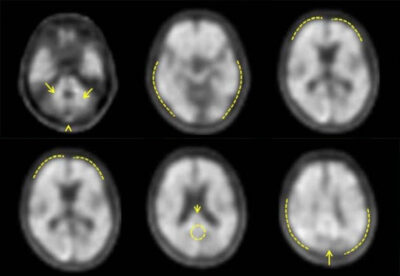
Image interpretation errors have been observed. There may be differences or errors when evaluating the presence of amyloid plaque in the brain using NEURACEQ®. Certain factors—such as significant brain shrinkage or movement during the scan—can make the images harder to read and may affect how clearly different parts of the brain can be seen.
Your specialist reads the NEURACEQ® image without taking into account your symptoms or medical history to avoid presumptions. In cases where it is difficult to tell exactly where a signal comes from in the brain, your healthcare providers may compare the NEURACEQ® scan with another type of brain image (magnetic resonance imaging or computer tomography) to better understand the findings.
Radiation Risk
NEURACEQ® uses a small amount of radiation, which adds to a person’s total lifetime exposure to radiation. Over time, higher amounts of radiation exposure may increase the risk of cancer. Health care professionals take special precautions to handle this medication safely and reduce unnecessary radiation exposure for both patients and staff. You are encouraged to drink plenty of fluids before and after the scan and to urinate often afterward.
WHO SHOULD TAKE EXTRA CARE WHEN USING NEURACEQ®?
Pregnant women
There is limited information about the use of NEURACEQ® during pregnancy. It is not known whether this scan could affect an unborn baby because studies in pregnant women and animals in reproduction have not been done. NEURACEQ® contains a small amount of radiation. All imaging medicines that use radiation may pose some risk to an unborn baby, depending on how far along the pregnancy is and how much radiation is involved.
If you are pregnant or think you might be pregnant, talk with your health care provider before having this scan. They will discuss the potential risks and benefits with you. It is important to know that all pregnancies have some natural risk. In the general population, about 2–4% of babies are born with a major birth defect, and about 15–20% of pregnancies end in miscarriage.
Breastfeeding mothers
It is not known whether NEURACEQ® passes into breast milk, how it might affect a breastfed baby or whether it could impact milk production. To reduce any possible radiation exposure to a nursing infant, mothers are advised to pump and discard breast milk for 24 hours after receiving NEURACEQ® to minimize radiation exposure. Breastfeeding can be resumed after that time. When making decisions about breastfeeding, both the benefits of breastfeeding and the mother’s medical need for the scan should be considered.
Patients under 18
NEURACEQ® has not been studied in children. Its safety and effectiveness are not known for pediatric patients.
Patients over 65
NEURACEQ® has been studied in adults aged 65 and older, including those over age 75. Studies did not show differences in safety or effectiveness between older adults and younger adults.
WHAT IF I GET TOO MUCH RADIATION?
If too much NEURACEQ® is given by mistake, your body may clear it more quickly by drinking fluids and urinating often. This helps reduce radiation exposure.
HOW WILL I RECEIVE NEURACEQ®?
There are strict laws on the use, handling and disposal of radiopharmaceutical products. NEURACEQ® is given only by trained and qualified health care providers who have specific experience working with imaging medicines that contain small amounts of radiation. These providers are licensed and approved by appropriate regulatory authorities to use these products safely.
WHAT ARE THE MOST COMMON SIDE EFFECTS OF NEURACEQ®?
The most common side effects (incidence ≥ 1%) were injection site pain, injection site redness, or irritation at the injection site.
This is not a complete report of risk information for NEURACEQ®. Talk to your healthcare provider about any side effects that concern you. You are encouraged to report negative side effects of prescription drugs to FDA: visit www.fda.gov/medwatch or call 1-800-FDA-1088 OR Lantheus Biosciences at 1-833-491-2524 OR PHV@lantheus.com.
Please see full Prescribing Information, including Important Facts for NEURACEQ®.
© 2026 Lantheus. All rights reserved.